
ETP Plant Manufacturer in India
Aquantam designs and manufactures effluent treatment plants that reduce pollutants in industrial wastewater before discharge or reuse. Each ETP is engineered around the wastewater your process produces.
What is an ETP plant?
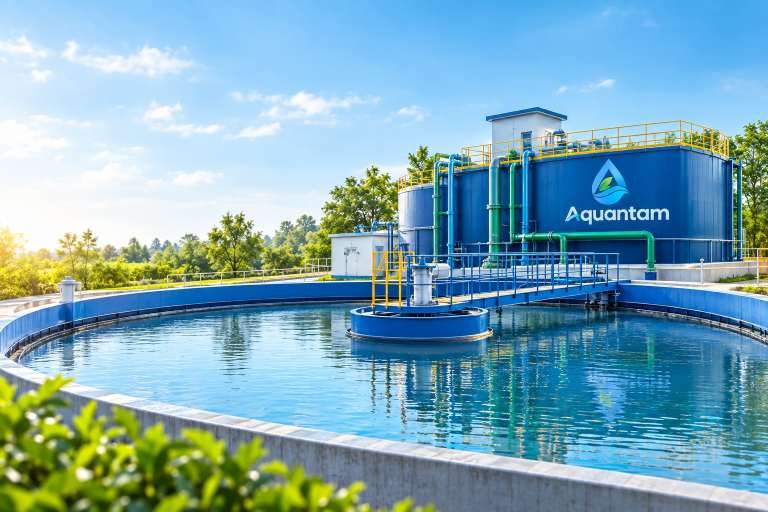
An Effluent Treatment Plant (ETP) is a treatment system designed to process industrial wastewater and reduce contaminants before the treated water is discharged or reused, depending on the applicable requirements.
Effluent differs sharply between industries. Textile wastewater carries dyes and salts, food and dairy wastewater is rich in organic matter, and chemical or engineering units may discharge metals, oils or specific chemicals. An ETP is therefore designed around the characteristics of the wastewater rather than the size of the plant alone.
How an effluent treatment plant works
ETP treatment is usually staged as primary, secondary and, where needed, advanced treatment.
Screening and equalization
Screens remove coarse solids. An equalization tank evens out variations in flow and strength so downstream stages run steadily.
pH correction and chemical treatment
Acids or alkalis correct pH, and coagulants and flocculants are dosed to bring fine and dissolved pollutants out of solution.
Primary clarification
Settling or flotation removes the solids formed in the previous stage, producing sludge for handling.
Biological treatment
Where the wastewater is organic, microorganisms break down dissolved organic matter in aerobic or anaerobic processes.
Secondary clarification
Biological solids are separated from the treated water and returned to the process or sent to sludge handling.
Advanced treatment
Filtration, activated carbon, oxidation or membranes can polish the water for discharge standards or reuse.
Sludge management
Sludge is thickened and dewatered so it can be handled and disposed of in line with regulations.
Industries that use ETPs
Textile and dyeing
Colour, salts and chemicals in effluent.
Food, beverage and dairy
High organic load from washing and processing.
Pharmaceutical and chemical
Complex organic and chemical content needing staged treatment.
Automobile and engineering
Oils, metals and surface-treatment residues.
Power and manufacturing
Blowdown, cleaning and process wastewater.
Any industry with process effluent
Where wastewater must meet discharge or reuse requirements.
How Aquantam approaches ETPs
Aquantam designs each ETP from your wastewater data, choosing the primary, secondary and advanced stages that suit it. Where reuse or restricted discharge is a goal, the ETP can be planned together with recycling or ZLD stages so the whole system works as one.
What determines ETP design
- Wastewater flow and its variation
- Pollutant types and concentration (BOD, COD, TSS, oil, metals, salts)
- Discharge or reuse standard
- Batch versus continuous operation
- Available space
- Sludge handling needs
- Power and chemical use
- Plans for reuse or ZLD
Frequently Asked Questions
What is an ETP plant?
An ETP plant is an Effluent Treatment Plant that treats industrial wastewater to reduce contaminants before the water is discharged or reused, depending on the applicable requirements.
What is the difference between an ETP and an STP?
An ETP treats industrial process wastewater, which varies by industry. An STP treats domestic and commercial sewage, which is more uniform and mainly organic.
What information is needed to design an ETP?
Flow rate, wastewater analysis (such as pH, BOD, COD, suspended solids, oil and specific pollutants), operating pattern and the discharge or reuse standard are the key inputs.
Can ETP-treated water be reused?
Often yes. With suitable advanced treatment, treated effluent can be reused for applications such as cooling, washing or gardening, depending on quality requirements and regulations.
What happens to ETP sludge?
Sludge is dewatered and then handled and disposed of according to its nature and the applicable regulations.
Request a Quote for Your ETP Plant
Share your city, capacity and water details, along with any analysis report you have. Aquantam will review your requirement and come back with a suggested treatment approach and next steps.
Tell us about your requirement
Fields marked * are required.