ZLD Plant Manufacturer in India
Aquantam supplies zero liquid discharge plants for facilities where discharge is restricted or high water recovery is a priority. A ZLD system recovers treated water for reuse and manages the concentrate that remains.
What is a ZLD plant?
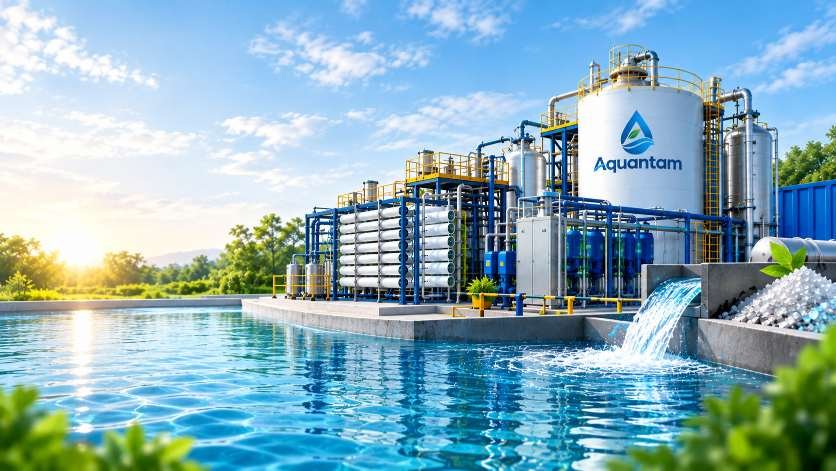
A Zero Liquid Discharge (ZLD) plant treats wastewater so that treated water is recovered for reuse and the remaining concentrate is managed to avoid liquid discharge. It combines effluent treatment, membrane concentration and further concentration or drying steps.
ZLD is not the right answer for every site. It adds equipment, energy use and operating effort, so it is usually chosen where regulations restrict discharge, where water is scarce or costly, or where high recovery has clear value. A technical and economic assessment comes first.
How a ZLD plant works
The stages depend on the wastewater and on how the concentrate will be managed.
Effluent treatment
Conventional ETP or STP stages remove suspended solids, organics and other contaminants that would foul downstream equipment.
Pretreatment for membranes
Filtration, softening and chemical treatment prepare the water for membrane concentration.
Membrane concentration
Ultrafiltration and RO recover a large share of the water as permeate and produce a smaller, saltier concentrate.
Further concentration
Evaporation or similar thermal concentration reduces the concentrate volume further and recovers condensate as water.
Crystallization or drying
Remaining salts are separated as solids, or dried, so no liquid leaves the site.
Water reuse and solids handling
Recovered water returns to service. Solids are stored and disposed of according to their nature and applicable regulations.
Where ZLD is considered
Restricted discharge locations
Sites where liquid discharge is limited or not permitted.
Water-scarce regions
Facilities that benefit from recovering as much water as possible.
Textile and dyeing
High-salt, coloured effluent.
Chemical and pharmaceutical
Complex effluent with dissolved solids.
Power and manufacturing
Blowdown and process wastewater with high dissolved solids.
Facilities with reuse targets
Where recovered water has clear operating value.
How Aquantam approaches ZLD
Aquantam plans ZLD as a whole system: effluent treatment, membrane recovery and concentrate management designed together, so each stage protects the next. We assess whether ZLD is needed at all, or whether high-recovery recycling meets your goals at lower cost.
What determines ZLD design
- Wastewater flow and dissolved solids
- Scaling and fouling compounds
- Target water recovery
- Concentrate volume and salt type
- Energy availability and cost
- Steam or heat source
- Solids disposal route
- Applicable regulations
Frequently Asked Questions
What is a ZLD plant?
A ZLD plant treats wastewater so that treated water is recovered for reuse and the remaining concentrate is managed to avoid liquid discharge.
Is ZLD mandatory?
Requirements vary by industry, state and location. Check with the applicable pollution control authority or your project consultant to confirm what applies to your facility.
What is the difference between ZLD and water recycling?
Recycling recovers and reuses treated water but may still discharge some concentrate. ZLD goes further by managing the concentrate so that no liquid leaves the site.
What affects the cost of a ZLD plant?
Wastewater volume and dissolved solids, target recovery, concentration technology, energy source, materials of construction and solids disposal all affect cost. Operating energy is a major running-cost factor.
What happens to the solid waste from ZLD?
Salts and residues are separated as solids and disposed of in line with their classification and the applicable regulations.
Request a Quote for Your ZLD Plant
Share your city, capacity and water details, along with any analysis report you have. Aquantam will review your requirement and come back with a suggested treatment approach and next steps.
Tell us about your requirement
Fields marked * are required.