Water Recycling Plant Manufacturer in India
Aquantam designs water recycling plants that treat wastewater to a quality suited to reuse, helping facilities reduce freshwater demand and the volume of wastewater they discharge.
What is a water recycling plant?
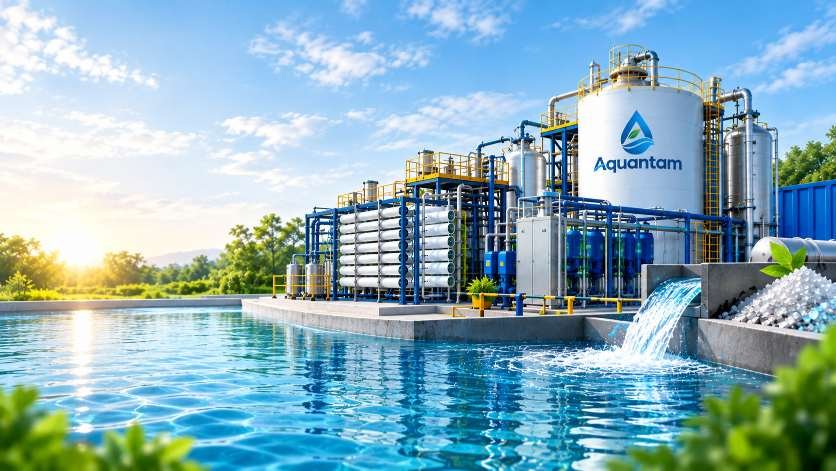
A water recycling plant treats used water, such as industrial effluent, treated sewage or process wastewater, to a quality that suits reuse in the same or another application. It turns wastewater from a disposal problem into a source of usable water.
Recycling usually builds on an ETP or STP and adds polishing stages such as filtration, ultrafiltration, RO and disinfection. How far the treatment goes depends on what the recycled water will be used for.
How a water recycling plant works
Recycling extends conventional treatment with stages matched to the reuse target.
Collection and equalization
Wastewater is collected and balanced so flow and strength are steady.
Primary and biological treatment
ETP or STP stages remove solids and organic matter.
Filtration
Media, carbon or fine filtration removes remaining particles and residual organics.
Membrane polishing
Ultrafiltration and RO reduce dissolved solids and remaining contaminants where the reuse quality requires it.
Disinfection
Treated water is disinfected before reuse.
Reuse and concentrate management
Recycled water returns to service. Any concentrate is treated, reused or handled as part of the design.
Where recycled water is used
Cooling tower make-up
Recycled water replaces part of the freshwater feed.
Washing and cleaning
Non-potable washing of floors, vehicles and equipment.
Toilet flushing
Reuse of treated sewage in buildings, where permitted.
Landscaping and gardening
Irrigation with suitably treated water.
Process use
Selected process needs, where quality requirements are met.
Boiler and utility feed
After suitable polishing and demineralization.
How Aquantam approaches water recycling
Aquantam looks at your existing treatment and the quality your reuse application needs, then designs the additional stages required to bridge the two. That may mean retrofitting polishing stages to an existing plant or designing a new integrated system.
What determines recycling plant design
- Wastewater source and consistency
- Reuse application and required quality
- Recovery target
- Salinity and dissolved solids
- Existing treatment plant
- Space and layout
- Energy and chemical use
- Regulations on reuse
Frequently Asked Questions
What is water recycling?
Water recycling is the treatment of used water so it can be reused, either for the same purpose or for another. It reduces freshwater demand and wastewater volume.
Is recycled water safe to use?
It is safe for the purpose it has been treated for. Quality is matched to the reuse application, and some uses, such as drinking, need much stricter treatment and regulatory approval.
How much water can be recovered?
It depends on the wastewater and the treatment used. Recovery is worked out from wastewater analysis and the reuse target for each project.
Can an existing ETP or STP be upgraded for recycling?
Often yes. Polishing stages such as filtration, ultrafiltration and RO can be added downstream of an existing plant, subject to its performance and layout.
How is recycling different from ZLD?
Recycling recovers and reuses treated water. ZLD also manages the remaining concentrate so no liquid is discharged.
Request a Quote for Your Water Recycling Plant
Share your city, capacity and water details, along with any analysis report you have. Aquantam will review your requirement and come back with a suggested treatment approach and next steps.
Tell us about your requirement
Fields marked * are required.